Family owned in North Pinellas County since 1990 Seven days a week, 9:00 AM to 5:00 PM
Jack Coniam, Inc. Lawn & Landscaping
Service

Mulch and pine bark installation

Fresh material in a bed is the fastest visible change you can make to the front of a house, but the reason to do it is what happens under the surface. A bed at the right depth holds its moisture, stays cooler and grows a fraction of the weeds a bare bed does.

Working depth
Two to three inches, kept even across the bed
Bed preparation
Weeded and edged before any material goes down
Materials
Shredded mulch or pine bark
Kept back off
Trunks, stems, plant crowns and the wall of the house
01 The bed work

What a mulch installation includes

New material spread over a bed that has not been weeded or edged looks finished for about two weeks. The preparation is most of the job and it is what decides how the bed looks in six months.

  • The bed is weeded first. Whatever is growing in the bed comes out, with the roots where we can get to them. Material laid over a live weed hides it for a week and then the weed comes back through it.
  • The bed line is cut back in. A clean vertical edge between the lawn and the bed is what holds the material inside the bed and stops St. Augustine runners from creeping into it.
  • Old material is loosened and leveled. Mulch that has matted or crusted over sheds water instead of letting it through, so it gets broken up and raked level before anything new goes on top.
  • The new material goes on to an even depth. We work to a consistent two to three inches across the whole bed, not a deep band along the front edge where it shows and nothing at the back.
  • Trunks, stems and walls are kept clear. Material is pulled back off the base of every trunk and stem, and kept down off siding and stucco.
  • Hard surfaces are blown clean at the end. The driveway, the walkway and the curb line are cleared, so nothing sits waiting to wash into the street or a storm drain.
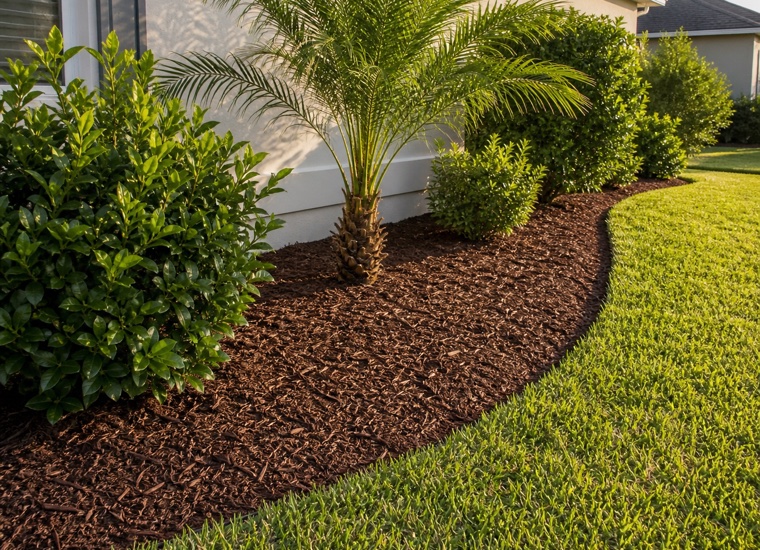
A freshly mulched planting bed with an even depth of pine bark and a clean cut edge against the lawn.
02 What mulch does

What a mulched bed does for the plants and the soil

Mulch is a working layer rather than a finish. Two to three inches of it changes what happens in the top few inches of soil, which is where the roots of most shrubs and bedding plants actually are.

It holds moisture through the dry months

The dry season here runs from roughly October to May. Sandy soil with nothing over it loses water off the surface all day, and a mulched bed keeps it long enough for the roots to use it. Outdoor watering in this part of Florida is limited to set days, so whatever a bed does get has to last.

It keeps the soil temperature down

Sun on bare soil in June drives the surface temperature far above what fine feeder roots are comfortable in, and those roots sit in the first few inches. A mulch layer shades the soil in a bed the same way tall grass shades the soil under a lawn.

It blocks the light weed seed needs

Most weed seed germinates in the top half inch of soil and needs light to start. A layer at the right depth takes that light away. The few weeds that do come through pull out of loose mulch easily, roots and all, which is not true of a weed rooted in packed sand.

It breaks down into the soil

Organic material is slowly worked into the soil underneath it, and that is most of the organic matter a sandy Florida bed is ever going to see. It is also why a bed needs topping up: the layer is not disappearing, it is going somewhere useful.

03 Depth

How deep the mulch should be

Depth is the one number that decides whether the layer helps the plants or works against them, and both too little and too much are common in yards here.

Two to three inches is the working range. Below that the layer is too thin to shade the soil, so weed seed gets the light it was waiting for and the bed dries out nearly as fast as bare ground.

Above three or four inches the problem reverses. A thick layer of fine material holds water against the stems and the shallow roots of the plants it is meant to be helping, which is how a healthy shrub ends up rotting at the base. A deep layer can also shed a light rain almost the way a roof does, so the mulch stays wet and the soil underneath stays dry.

The other reason depth matters is that a bed is topped up rather than started again. Old material settles and works into the soil below, so the job is to see what is left, loosen it, and add enough to bring the whole bed back to depth. Laying a full fresh layer over the old one every year is how a bed quietly reaches six inches and starts holding water against everything growing in it.

What each depth does

DepthWhat it does
Under 2 inchesToo thin to block light or hold moisture for long. Weeds come through it and the bed dries out quickly.
2 to 3 inchesThe working range. It shades the soil, holds moisture, and still lets rain and irrigation pass straight through to the roots.
Over 4 inchesHolds water against stems and shallow roots, buries the crowns of smaller plants, and can shed light rain instead of passing it on.

These depths are general practice for Florida landscape beds. Some plantings want less than the working range, and we will say so when we look at the beds you have.

04 Around trunks and stems

Mulch is kept back off trunks and stems

A cone of mulch piled up against a trunk is a common sight in this county, and it is one of the easier ways to lose a tree that took twenty years to grow.

Bark is not root tissue. It is built to stay dry and to breathe, and it has no defense against being held wet for months on end. Material banked against a trunk keeps the bark damp, and damp bark softens, rots and lets in insects and disease at the one point the whole tree depends on.

Trees also answer a buried trunk by rooting up into the mulch. Those roots circle the trunk instead of running out into the soil, and as they thicken they can girdle the tree and close off what it moves up and down. By the time the canopy shows it, the damage at the base has usually been there for years.

So the material comes back off every trunk and stem, and the root flare, the point where the trunk widens out into the ground, is left visible. The bed still looks finished and nothing on the property is being buried.
How we leave it

  • Trees keep a clear collar. The layer stops short of the trunk and is spread level rather than mounded into a cone against it.
  • Shrubs and perennials are not buried. The crown of the plant, where the stems leave the ground, stays open. Material over a crown rots it.
  • It stays back off the house. Mulch banked against siding or stucco holds moisture against the wall and gives insects a covered run straight to it.
  • It stays inside the bed. The cut edge does most of that, and anything that ends up on the drive or the walkway is cleared before we leave.
05 Choosing a material

How shredded mulch and pine bark differ

Both materials do the same job in the bed. They hold a slope differently and they break down at different speeds, so in practice the bed decides which one suits it.

The general difference between the two. Either one, at the right depth, will hold moisture and slow the weeds down.
Shredded hardwood mulchPine bark
TextureFine stringy pieces that knit together into a mat within a few weeks.Larger chunks and nuggets that sit loose on the surface of the bed.
On a slopeThe pieces lock into each other, so it holds a bank or a graded bed much better.Nuggets roll and they float, so an afternoon storm can move them down the slope and out of the bed.
How long it lastsBreaks down faster. It feeds the soil sooner and it wants topping up sooner.Breaks down slowly, so the layer holds its depth for longer before it needs attention.
SuitsSloped beds, narrow beds along a walkway, and beds you want to read as one continuous surface.Flat beds, larger beds under trees and shrubs, and beds you would rather not go back to as often.
06 Related work

Other services that go with bed work

Mulch is usually part of a wider tidy up of the front of a property. These three are the jobs most often done at the same time.

Free quotes

Get the beds looked at

Call us and we will come out, look at the beds you have, see what depth is left in them and tell you what they need. There is no obligation once you have it.

Seven days a week, 9:00 AM to 5:00 PM. Email cjackc.inc@gmail.com.

Call now Free quote