Clippings break down and feed the grass
Cut leaf is mostly water and it decomposes within a couple of weeks in this climate. The nitrogen in it returns to the soil, which is the reason clippings are left on a lawn rather than removed from it.
This is the last job on the property every time. Every hard surface we have thrown material onto gets blown clean, and the clippings go back onto the lawn rather than into the street or down a storm drain.
Mowing, edging and trimming all throw material onto concrete. Clearing it is part of the visit rather than a courtesy, and it is how the property is left when the trailer gate goes up.
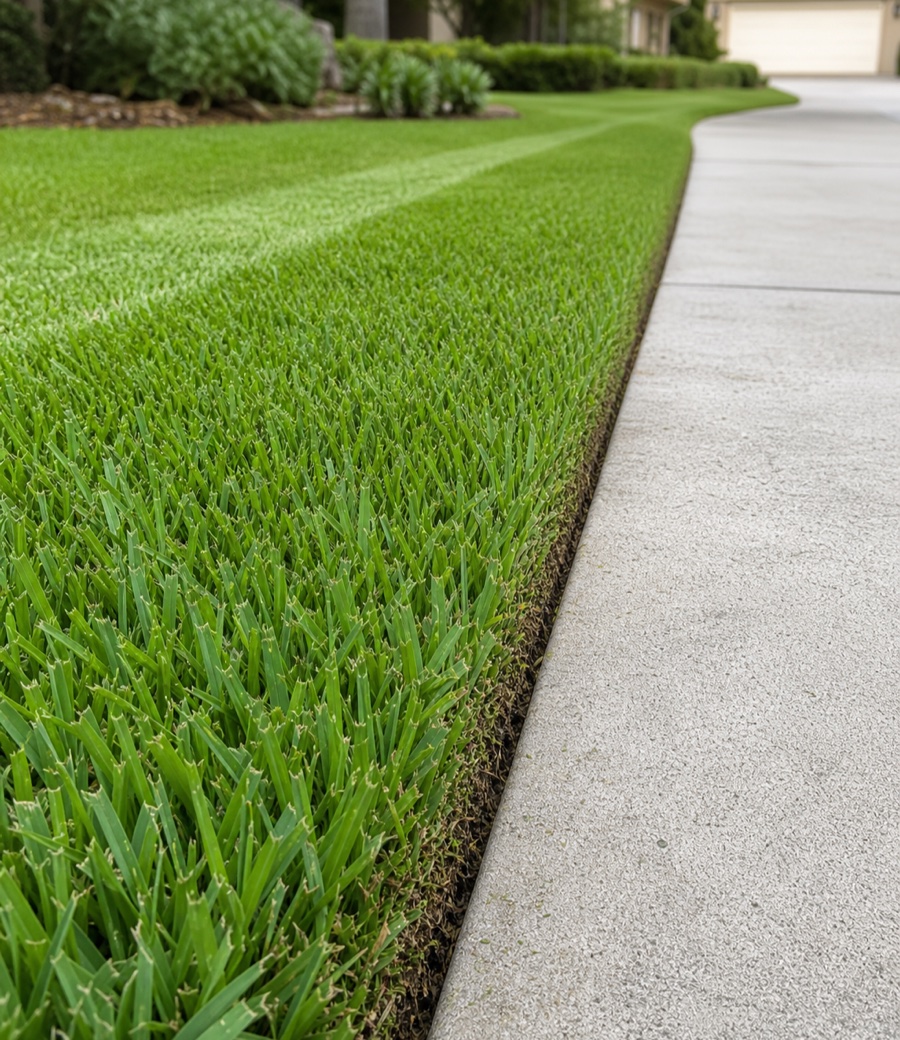
The order of the four jobs is not arbitrary. Three of them make the mess that the fourth one clears, so the fourth one goes at the end.
The deck throws a fine layer of clippings out sideways, and some of that lands on the drive, the walk and the sidewalk however carefully the passes are run.
An edger cuts down into the soil along the line, which throws grass and a little dirt straight onto the concrete beside it.
A trimmer scatters green material several feet in every direction, which is unavoidable and is why this job comes before the blowing rather than after it.
Everything the first three jobs put onto concrete is moved back onto the lawn and the beds. Doing this any earlier in the visit would only mean doing it twice.
If you are home when we are there and something has been missed, say so while the trailer is still on the street. It is a two minute job at that point.
Blowing debris into the gutter is quicker than blowing it back onto a lawn. It is also the one shortcut on this list that has somewhere else to end up, and in this county that somewhere is the water.
A storm drain is not a treatment system. Water that goes into a grate at the curb in Pinellas County runs through a pipe and comes out in a ditch, a bayou or the bay, and whatever was lying in the gutter goes with it. There is nothing in between to catch it.
Grass clippings and yard debris carry nitrogen and phosphorus. On a lawn those two nutrients are exactly what the grass is living on. In the water they feed algae instead, and a bloom of algae takes oxygen out of the water as it dies back, which is what kills fish and fouls a shoreline.
That is why Florida landscape Best Management Practices are explicit on the point: clippings and yard debris are kept out of the street and out of the storm drains rather than swept into them. The company is trained and certified in Landscape Best Management Practices, and clipping management is one of the things that certification covers.
Returning them is not simply the tidiest place to put them. A layer of cut leaf is doing useful work on a Florida lawn, and taking it away would mean the grass has to get the same nutrients from somewhere else.
Cut leaf is mostly water and it decomposes within a couple of weeks in this climate. The nitrogen in it returns to the soil, which is the reason clippings are left on a lawn rather than removed from it.
Thatch is made of stems, runners and roots, not of leaf clippings. Taking clippings off a lawn does not prevent it, and on St. Augustine a light scattering of clippings is doing no harm at all.
Growth cut in the wet season can drop in mats that smother the grass underneath them. Where that happens the material is broken up and spread rather than left sitting in piles across the lawn.
These three happen before the blowing off, on the same visit. The four of them together are the regular maintenance schedule.
Call us and we will come out, walk the property and tell you what we would do and how often. Every visit ends the same way, with the hard surfaces blown clean and the clippings back where they belong.
Seven days a week, 9:00 AM to 5:00 PM. Email cjackc.inc@gmail.com.