A wet day moves the visit, it does not cancel it
Cutting saturated ground tears the turf and leaves ruts across the lawn, so if a yard is standing in water we come back rather than force it.
Mowing is the part of the visit everything else is built around. We cut at a height that suits the grass and the time of year, which is what keeps a Florida lawn thick enough to hold its color and shade out most of its own weeds.
Mowing is not billed as a separate item and it does not arrive on its own. The four parts of the regular visit go together, and there is no version of the visit where one of them gets skipped to save time.
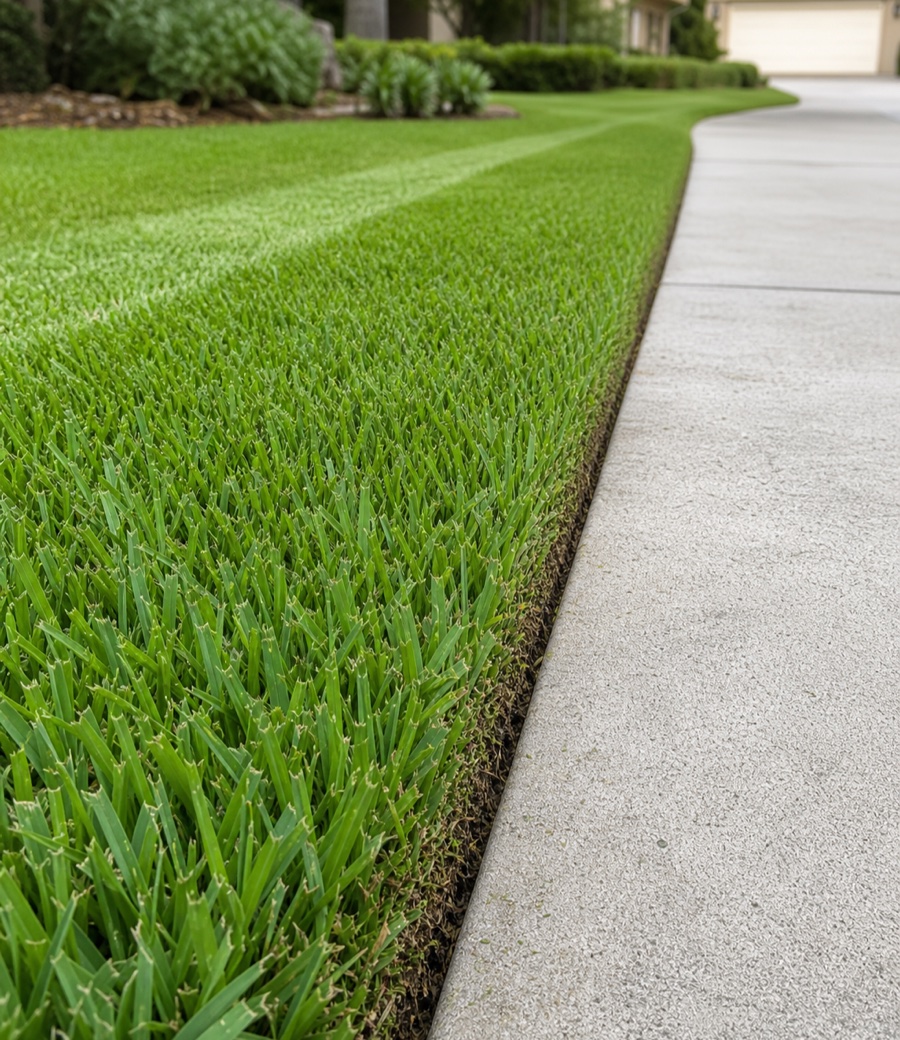
The most common thing done to a lawn in this county is cutting it too short. It looks tidier for about four days and then the lawn spends the rest of the season recovering.
Grass feeds itself through its leaf. Take too much of the leaf off and the plant has to spend stored energy rebuilding it instead of putting roots down, and a lawn with shallow roots is the one that browns off first in May and lets weeds in through the gaps.
The rule we work to is that no more than a third of the blade height comes off in one cut. That is also the reason a schedule matters: a lawn left for three weeks in July cannot be brought back to height in one pass without scalping it.
Cutting high has a second effect that matters more here than it does further north. Taller grass shades its own soil, which keeps the ground cooler, holds moisture longer between storms and stops most weed seed from getting the light it needs to germinate.
| Grass | Cut height |
|---|---|
| St. Augustine | 3.5 to 4 inches |
| Bahia | 3 to 4 inches |
| Zoysia | 2 to 2.5 inches |
| Bermuda | 1.5 to 2 inches |
St. Augustine is what most lawns in North Pinellas are, and it is the one that suffers most from being cut low. If you are not sure what you have, we will tell you when we look at the yard.
Grass in this part of Florida does not grow at one speed all year, so a single fixed frequency does not suit it. We set the frequency to what the lawn is actually doing and change it when that changes.
| Time of year | What the grass is doing | Usual frequency |
|---|---|---|
| April to October | Heat and afternoon storms push hard growth. This is when a lawn gets away from you fastest, and a missed week shows. | Weekly |
| November to March | Cooler and drier. Growth slows right down and the lawn holds its shape for much longer between cuts. | Every other week |
| Any time | You are going away, you are hosting, you are selling the house, or the yard has simply got ahead of you. | A one time visit |
Between June and September it rains most afternoons, which is normal here and is planned around rather than treated as a surprise.
Cutting saturated ground tears the turf and leaves ruts across the lawn, so if a yard is standing in water we come back rather than force it.
It clumps behind the deck, drops in mats that smother the grass underneath, and leaves a finish nobody would be happy with.
The same rain that stops a visit is what makes the lawn need one. This is why the schedule tightens to weekly from April.
These three happen on the same visit as the cut. Together they are what separates a mowed lawn from a maintained one.
Call us and we will come out, look at the grass you have and tell you what we would do and how often. There is no obligation once you have it.
Seven days a week, 9:00 AM to 5:00 PM. Email cjackc.inc@gmail.com.