A bed line goes from both sides
Grass runs into the bed from the lawn side while mulch spreads out into the lawn from the bed side. Left for a season the two meet in the middle and there is no line left to see.
Edging is the one job that most visibly separates a mowed lawn from a maintained one. It is a vertical cut along every hard edge on the property, and it is what gives the lawn a line you can see from the street.
Edging runs on the same visit as the cut rather than as an occasional tidy up, because an edge only reads as a line while it is being held.
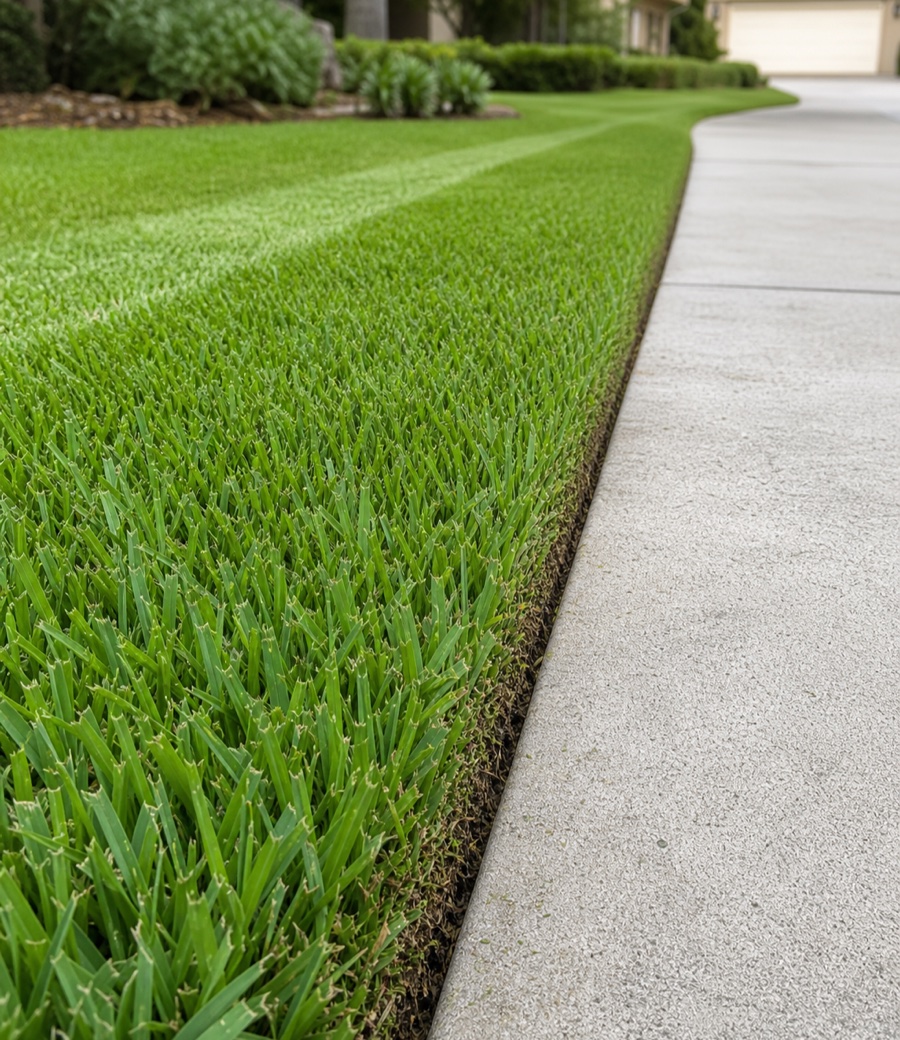
Both leave a lawn looking tidy on the day. Only one of them is still there a week later, and the difference is what the blade does to the plant.
An edger runs a blade down into the ground on a vertical plane. Grass, runner and a shallow line of soil are severed together, and the face of that cut stands up as a defined line along the concrete.
A string trimmer held on its side does something different. It shortens the grass that has already grown over the slab without touching the runner that carried it there. The runner is still alive under the lip of the concrete, so it pushes straight back out, which is why a trimmed edge looks acceptable on the day and rough again within the week.
The cut line does a second job that is easy to miss. It gives the mower something to follow, so the deck can be run right up to the drive without leaving the narrow strip of tall grass that otherwise sits between the wheel and the concrete on an otherwise clean lawn.
| A cut edge | A trimmed edge | |
|---|---|---|
| Tool | An edger with a vertical blade | A trimmer turned on its side |
| What comes off | Leaf, runner and a line of soil | Only the leaf above the slab |
| How long it holds | Through to the next visit | A few days |
| The line left | A defined face along the concrete | A soft, uneven fade |
A trimmer still has plenty of work to do on a property. It is the right tool around posts, fences and equipment, and the wrong one for a driveway line.
An edge that is left alone does not stay where it was. It moves, slowly enough that nobody watches it happen, and the way St. Augustine grows is the reason it moves faster here than it would further north.
St. Augustine, which is what most lawns in North Pinellas are, spreads by stolons. These are runners that travel across the surface of the ground and root wherever a node meets soil. The plant grows sideways by design, and nothing about the way it does that respects a boundary.
Over a growing season those runners cross onto the concrete. They root in the seam where the slab meets the soil, they carry on over the top, and the grass line moves out a little on every warm wet week. What a homeowner notices is not the runners. It is that the driveway looks narrower than it used to and the sidewalk has gone from four feet wide to three.
Holding the line on every visit stops that before it starts. Once an edge has been left for a season it takes more than one pass to recover, because the runners under the lip of the concrete have to come out along with the ridge of soil and thatch that built up over them.
A planting bed loses its line from both directions at once, and it is the edge rather than the mulch that makes a bed look finished.
Grass runs into the bed from the lawn side while mulch spreads out into the lawn from the bed side. Left for a season the two meet in the middle and there is no line left to see.
The vertical cut severs the runners heading into the bed and leaves a shallow trench for the mulch to sit behind. That trench is the reason a bed reads as sharp and not merely as freshly topped up.
Beds are cut to the curve they were laid out with. We follow the existing line rather than tidying it into a straight one, because the curve is part of how the front of the house is set out.
The four core jobs travel together on one visit. Edging is the one that shows, and the other three are what it has to show against.
Call us and we will come out, walk the drive, the walks and the beds, and tell you what the edges need and how often. There is no obligation once you have it.
Seven days a week, 9:00 AM to 5:00 PM. Email cjackc.inc@gmail.com.